Long-Haired Cat Breeds: Grooming and Maintenance Tips
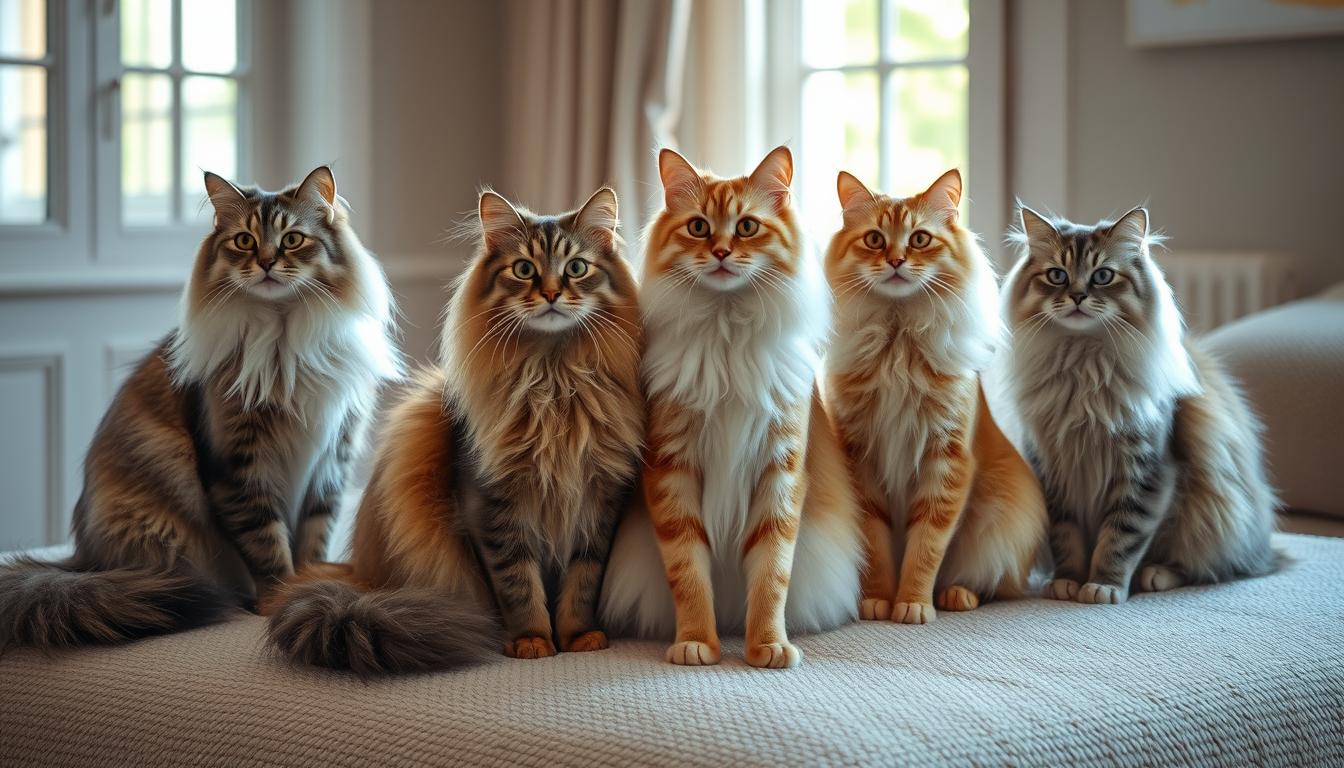
Table of Contents
As a cat owner, you’re likely aware of the unique challenges and rewards that come with having a long-haired feline friend. Their beautiful coats require regular grooming to prevent matting and tangling.
Different breeds have distinct characteristics, and understanding these traits is essential to providing the best care. In this article, we’ll explore the various long-haired cat breeds and provide you with essential grooming tips to keep your cat looking its best.
The Charm and Challenges of Long-Haired Cats
If you’re considering bringing a long-haired cat into your family, it’s essential to understand their specific needs. Long-haired cats are not just visually stunning; they also have unique requirements that set them apart from their short-haired counterparts.
What Defines a Long-Haired Cat
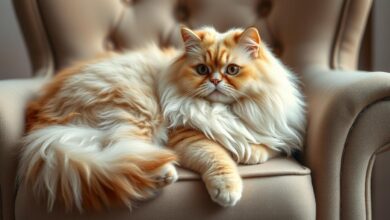
A long-haired cat is defined by its coat length, which typically exceeds 2 inches. Breeds like the Persian, Maine Coon, and Ragdoll are popular examples of long-haired cats. Their beautiful coats require regular grooming to prevent matting and tangling.
Benefits of Owning a Fluffy Feline
Owning a long-haired cat can be incredibly rewarding. Their soft, flowing coats are not only beautiful but also make for a wonderful companion. As one cat enthusiast notes,
“There’s something therapeutic about stroking a long-haired cat’s fur; it’s like a stress-relieving experience.”
Many owners find that the affectionate nature of long-haired cats makes them ideal pets.
Understanding Grooming Commitments
Grooming is a critical aspect of caring for a long-haired cat. Regular brushing is necessary to prevent mats and tangles, which can be painful for the cat if left unaddressed. A commitment to daily grooming is essential to keep your cat’s coat healthy and looking its best. This includes not just brushing but also occasional bathing and nail trimming.
By understanding the needs of your long-haired cat, you can provide the best possible care and enjoy a rewarding companionship. Whether you’re a seasoned cat owner or new to the world of feline care, being aware of the grooming commitments involved will help you make an informed decision about bringing a long-haired cat into your home.
Most Popular Long-Haired Cat Breeds
Among the many beautiful long-haired cat breeds, some stand out for their popularity and charm. Whether you’re drawn to their majestic appearance or their affectionate nature, these breeds have captured the hearts of many cat enthusiasts. Let’s explore some of the most beloved long-haired cat breeds that make wonderful companions.
Persian: The Classic Long-Haired Beauty
The Persian cat is one of the most recognizable long-haired breeds, known for its stunning coat and calm demeanor. Their beautiful fur requires regular grooming to prevent matting and tangling. Persians are gentle and quiet, making them a great choice for a serene home environment.
Maine Coon: Gentle Giants with Magnificent Coats
Maine Coon cats are renowned for their large size and majestic coats. Despite their size, they are known for being gentle and friendly. Their thick, water-resistant coats require regular brushing, especially during shedding season. Maine Coons are intelligent and playful, making them a delightful addition to active families.
Ragdoll: Silky-Furred Companions
Ragdolls are aptly named for their tendency to go limp in their owners’ arms, showcasing their affectionate and docile nature. Their silky coats are soft to the touch and require regular grooming to prevent matting. Ragdolls are ideal for those seeking a laid-back and loving companion.
Norwegian Forest Cat: Natural Weatherproof Coats
The Norwegian Forest Cat boasts a robust build and a thick, water-resistant coat that has adapted to the harsh Scandinavian climate. Their beautiful fur requires regular brushing to prevent matting. These cats are known for their intelligence, playfulness, and friendly disposition.
Siberian: Hypoallergenic Options for Allergy Sufferers
Siberian cats are known for their thick, triple coats and their hypoallergenic properties, making them a good choice for some allergy sufferers. Despite their heavy fur, they are agile and playful. Regular grooming is necessary to prevent matting and keep their coat in good condition.
| Breed | Coat Characteristics | Personality Traits | Grooming Needs |
|---|---|---|---|
| Persian | Long, fluffy, prone to matting | Gentle, quiet | High |
| Maine Coon | Thick, water-resistant, shedding heavily | Friendly, intelligent, playful | High |
| Ragdoll | Silky, soft, prone to matting | Affectionate, docile, laid-back | Medium to High |
| Norwegian Forest Cat | Thick, water-resistant, robust | Intelligent, playful, friendly | Medium to High |
| Siberian | Thick, triple coat, hypoallergenic | Agile, playful, adventurous | High |
Each of these popular long-haired cat breeds brings its unique charm and characteristics to the table. Whether you’re looking for a gentle giant or a hypoallergenic companion, there’s a long-haired cat breed that’s sure to capture your heart.
Exotic and Unique Long-Haired Cat Breeds
For cat enthusiasts looking for something beyond the ordinary, exotic long-haired cat breeds offer a fascinating array of choices. These breeds not only captivate with their stunning appearances but also come with their own set of characteristics and grooming needs.
Turkish Angora: Elegant and Refined
The Turkish Angora is known for its silky, fine coat and playful yet affectionate nature. Originating from Turkey, this breed has been cherished for centuries for its beauty and intelligence. Their long-haired coat requires regular grooming to prevent matting and tangling.
Himalayan: Persian-Siamese Hybrid Beauty
The Himalayan breed combines the best of Persian and Siamese cats, boasting a striking point coloration and a calm demeanor. Their long coat needs daily brushing to maintain its health and appearance.
Nebelung: Rare Blue Longhairs
Nebelung cats are characterized by their misty blue coat and bright green eyes. This breed is relatively rare and requires regular grooming to prevent hair loss and matting.
Somali: Fox-Like Appearance with Ticked Coats
The Somali breed is known for its fox-like appearance and vibrant ticked coat. Their long hair requires regular maintenance to keep it in optimal condition.
Balinese: Another Hypoallergenic Option
Balinese cats are known for their striking blue eyes and hypoallergenic coat, making them a great choice for those with allergies. Despite their long hair, they produce fewer allergens than many other breeds.
Here’s a comparison of these exotic breeds:
| Breed | Coat Type | Grooming Needs | Hypoallergenic |
|---|---|---|---|
| Turkish Angora | Silky, fine | High | No |
| Himalayan | Long, dense | High | No |
| Nebelung | Misty blue, medium length | Medium | No |
| Somali | Ticked, long | High | No |
| Balinese | Medium length, fine | Medium | Yes |
When choosing an exotic long-haired cat breed, consider your ability to commit to their grooming needs. While they may require more maintenance, the reward is a beautiful, unique companion.
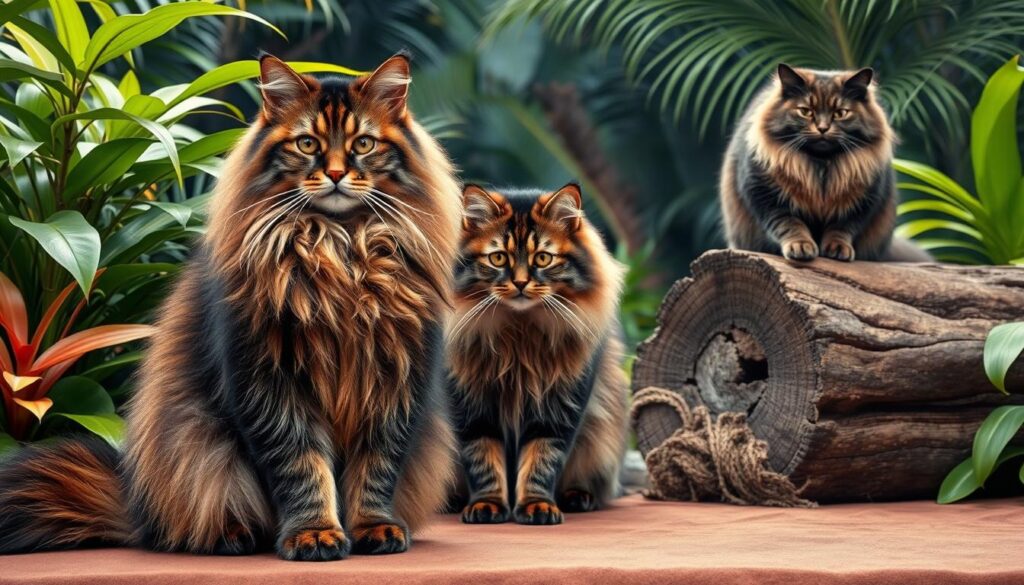
Essential Grooming Tools for Long-Haired Cats
To keep your long-haired cat’s coat healthy and beautiful, you’ll need a set of essential grooming tools. Regular grooming is not just about maintaining their appearance; it’s also crucial for their overall health and comfort.
Selecting the Right Brushes and Combs
The foundation of any grooming kit is a good brush or comb. For long-haired cats, slicker brushes and wide-tooth combs are particularly effective. Slicker brushes are great for detangling and smoothing the coat, while wide-tooth combs are gentler on the cat’s skin and can help prevent breakage.
De-shedding Tools and Their Proper Use
De-shedding tools are designed to reduce the amount of loose hair, which can help minimize shedding around the house. De-shedding rakes and Furminators are popular choices. It’s essential to use these tools gently to avoid causing discomfort or injury to your cat.
Grooming Wipes, Sprays, and Dry Shampoos
In addition to brushes and combs, grooming wipes, sprays, and dry shampoos can be very useful. Grooming wipes can clean the coat between baths, while sprays and dry shampoos can help manage oil and dirt. These products can be especially helpful for cats that are sensitive to water or have skin conditions.
Nail Care and Trimming Equipment
Nail care is an often-overlooked aspect of grooming. Nail clippers or nail grinders are necessary for keeping your cat’s nails at a healthy length. It’s crucial to be cautious and gentle when trimming to avoid causing pain or injury.
Creating Your Complete Grooming Kit
To create a complete grooming kit, start with the basics: a slicker brush, a wide-tooth comb, and nail care tools. As you become more comfortable with grooming, you can add more specialized tools like de-shedding rakes and grooming wipes. Remember, every cat is different, so it may take some trial and error to find the tools that work best for your long-haired cat.
Step-by-Step Daily Grooming Routine
Establishing a daily grooming routine is essential for maintaining the beauty and health of your long-haired cat’s coat. Regular grooming not only prevents matting and tangling but also strengthens the bond between you and your feline companion.
Step1: Creating a Positive Grooming Environment
Begin by creating a calm and comfortable environment for grooming. Choose a quiet, distraction-free area where your cat feels safe and relaxed. Make sure the room is at a comfortable temperature, and consider using a non-slip mat or a grooming table to prevent accidents.
Step2: Proper Brushing Techniques by Coat Type
Different long-haired cat breeds have unique coat characteristics that require specific brushing techniques. For example, Persian cats need gentle, thorough brushing with a wide-tooth comb, while Maine Coon cats can benefit from a slicker brush to remove loose hair. Always brush in the direction of hair growth to avoid causing discomfort or pain.
Step3: Identifying and Addressing Mats and Tangles
Regularly inspect your cat’s coat for mats and tangles, paying particular attention to areas prone to matting, such as behind the ears and under the legs. Use a detangling spray or conditioner to gently work out mats, starting from the end of the hair and working your way up.
Step4: Face, Eye, and Ear Cleaning Methods
Delicately clean your cat’s face, eyes, and ears using a damp cloth or specialized grooming wipes. Be cautious around sensitive areas, and avoid using harsh chemicals or excessive force.
Step5: Quick Daily Maintenance Checks
Finish your grooming routine with a quick daily maintenance check, inspecting your cat’s coat for any new mats or tangles, and making sure their nails are trimmed and clean. This daily check helps maintain your cat’s overall health and prevents grooming-related issues.
By following this step-by-step daily grooming routine, you can keep your long-haired cat’s coat healthy, shiny, and beautiful, while also strengthening your bond with your feline friend.
Bathing and Deep Cleaning Your Long-Haired Cat
Long-haired cat breeds require regular grooming, and bathing is an essential part of their care routine. While it may seem daunting, bathing your cat can be a positive experience with the right approach.
When and How Often to Bathe Different Breeds
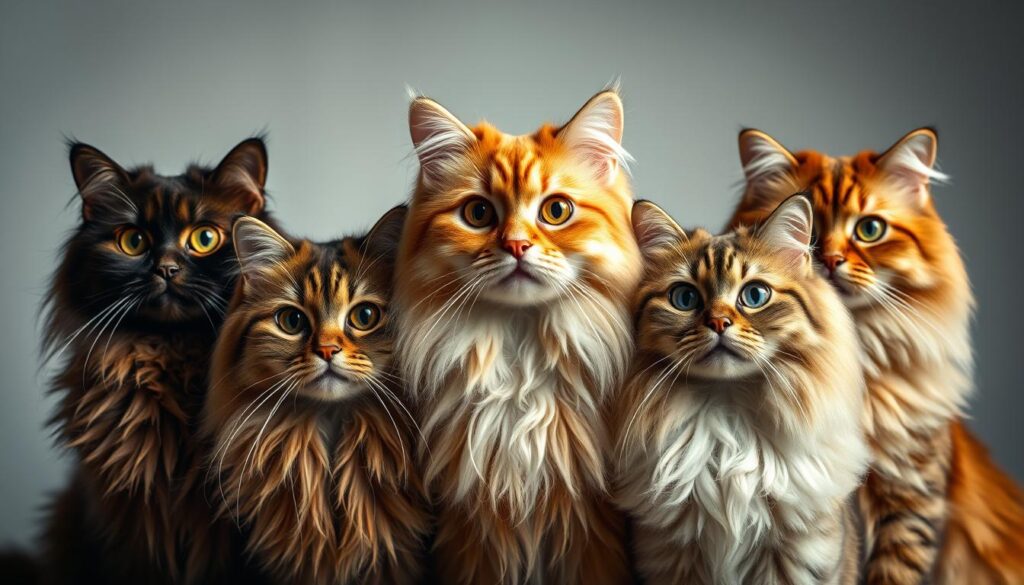
The frequency of bathing depends on the breed and lifestyle of your cat. For instance, Persian cats may require more frequent bathing due to their thick coats, while Siberian cats might need less frequent bathing due to their hypoallergenic nature.
Generally, long-haired cats should be bathed every 4-6 weeks. However, this can vary based on factors such as outdoor activity and visible dirt or odor.
Step-by-Step Bathing Process for Minimal Stress
To minimize stress during bathing, follow these steps:
- Prepare everything in advance, including towels, shampoo, and conditioner.
- Gently introduce your cat to water, starting with their paws.
- Use lukewarm water and a mild shampoo specifically designed for cats.
- Avoid getting water or shampoo in your cat’s ears, eyes, or nose.
- Rinse thoroughly to remove all soap residue.
Choosing the Right Shampoo and Conditioner
Selecting the appropriate shampoo and conditioner is crucial for your cat’s coat health. Look for products that are pH-balanced and formulated for long-haired cats. Some cats may require hypoallergenic or medicated shampoos, depending on their skin condition.
Effective Drying Techniques
After bathing, gently pat your cat dry with a towel. For long-haired breeds, using a blow dryer on a low setting can help prevent matting. Be cautious not to scare your cat with the noise, and consider using a dryer specifically designed for pets.
Post-Bath Grooming and Care
Post-bath grooming is crucial for preventing mats and tangles. Use a wide-tooth comb or a slicker brush to gently detangle your cat’s fur, starting from the ends and working your way up. Regular grooming after bathing will keep your cat’s coat healthy and beautiful.
Health Considerations for Long-Haired Cat Breeds
The stunning coats of long-haired cats require more than just regular grooming; they demand attention to specific health concerns. As you care for your long-haired feline friend, it’s essential to be aware of potential health issues that can arise.
Preventing and Managing Hairballs
One common issue with long-haired cats is hairballs. These form when swallowed hair accumulates in the stomach. Regular grooming can help reduce the amount of hair ingested. Additionally, using a hairball formula cat food or giving your cat occasional hairball remedies can help manage this problem.
Identifying Skin Issues Hidden by Fur
Long-haired cats can hide skin issues beneath their thick coats. Regularly inspect your cat’s skin for signs of irritation, redness, or parasites. This can be done during grooming sessions, gently parting the fur to examine the skin underneath.
Nutrition for Healthy Coat Maintenance
A balanced diet rich in omega-3 fatty acids, vitamins, and minerals is crucial for maintaining a healthy coat. Ensure your cat’s food is formulated to support skin and coat health. Sometimes, supplements can be beneficial, but consult with your veterinarian before adding any to your cat’s diet.
When to Seek Veterinary Care for Coat Problems
If you notice excessive shedding, bald spots, or changes in your cat’s coat condition, it’s time to consult a veterinarian. These could be signs of underlying health issues that need professional attention.
Parasite Prevention and Detection
Long-haired cats are not immune to parasites like fleas, ticks, and mites. Regular use of parasite prevention treatments and thorough grooming can help detect and manage these issues early on.
By being proactive about these health considerations, you can help ensure your long-haired cat remains healthy and happy. Regular veterinary check-ups are also crucial in maintaining your cat’s overall health.
Seasonal Care for Long-Haired Cats
As the seasons change, your long-haired cat’s grooming needs will shift, requiring adjustments to their care routine. Whether you have one of the best long-haired cat breeds or a mix, understanding these seasonal changes is crucial for maintaining their health and happiness.
Summer Cooling and Grooming Strategies
During the summer, long-haired cats can suffer from heat stress. Regular grooming is essential to prevent matting and tangling, which can exacerbate heat discomfort. Use a wide-tooth comb or a slicker brush to gently remove loose hair and prevent overheating.
Managing Heavy Winter Coats
In the winter, many long-haired cats grow thicker coats to stay warm. While this natural adaptation is beneficial, it requires regular maintenance to prevent matting. Daily brushing is recommended to keep their coat in good condition and to reduce shedding.
Handling Spring Shedding Season
Spring brings a significant shedding season for many long-haired breeds. To manage this, increase the frequency of brushing and consider using a de-shedding tool to reduce the amount of loose hair.
Fall Preparation for Indoor and Outdoor Cats
As fall approaches, it’s essential to prepare your cat for the changing weather. For outdoor cats, this may involve checking their coat for mats and tangles, while indoor cats may require adjustments to their grooming routine to prevent shedding.
Professional Grooming: When to Schedule Appointments
Sometimes, professional grooming is necessary, especially for cats with severe matting or for owners who are unsure about how to manage their cat’s coat. Schedule appointments seasonally or as needed to keep your cat looking and feeling their best.
By adapting your grooming routine to the changing seasons, you can ensure your long-haired cat remains comfortable and healthy throughout the year. Remember, the key to successful cat care is observation and adaptation.
“The way we care for our cats says a lot about us. It’s a reflection of our compassion and our commitment to their well-being.”
Conclusion: Enjoying Life with Your Long-Haired Feline Friend
Caring for a long-haired cat can be a rewarding experience, and with the right grooming and maintenance tips, you can enjoy a happy and healthy companionship. By understanding the unique needs of popular long-haired cat breeds, you’re well on your way to providing the best possible care for your feline friend.
Regular grooming not only keeps your cat’s coat clean and healthy but also strengthens the bond between you and your pet. Whether you’re dealing with the majestic Maine Coon or the elegant Persian, a consistent grooming routine is essential for preventing matting and tangling, as well as reducing the risk of hairballs and skin issues.
As you’ve learned, different long-haired cat breeds have specific grooming needs. By following the tips and advice outlined in this article, you can tailor your care to meet the unique requirements of your cat, ensuring they lead a comfortable and happy life. With patience, love, and the right care, you and your long-haired feline friend can enjoy many joyful years together.